



Greetings! Welcome to February, and another edition of the Monday Gate Drop Column, which as always is presented by Yamaha Motor Canada. I’ll begin this week with some unrelated motocross news. At approximately 08:07am eastern standard time, Wiarton Willie awoke from his slumber, and despite -13c temperatures, and three weeks of back to back to back winter storms, our trusty groundhog did not see his shadow. This means that Willie is predicting an early spring for all of us in Ontario at least. This comes as little surprise as we have been under the grips of winter since mid-November, so I think the old saying “In like a lion and out like a lamb” is going to apply to this winter. It begin early and really hasn’t let up.
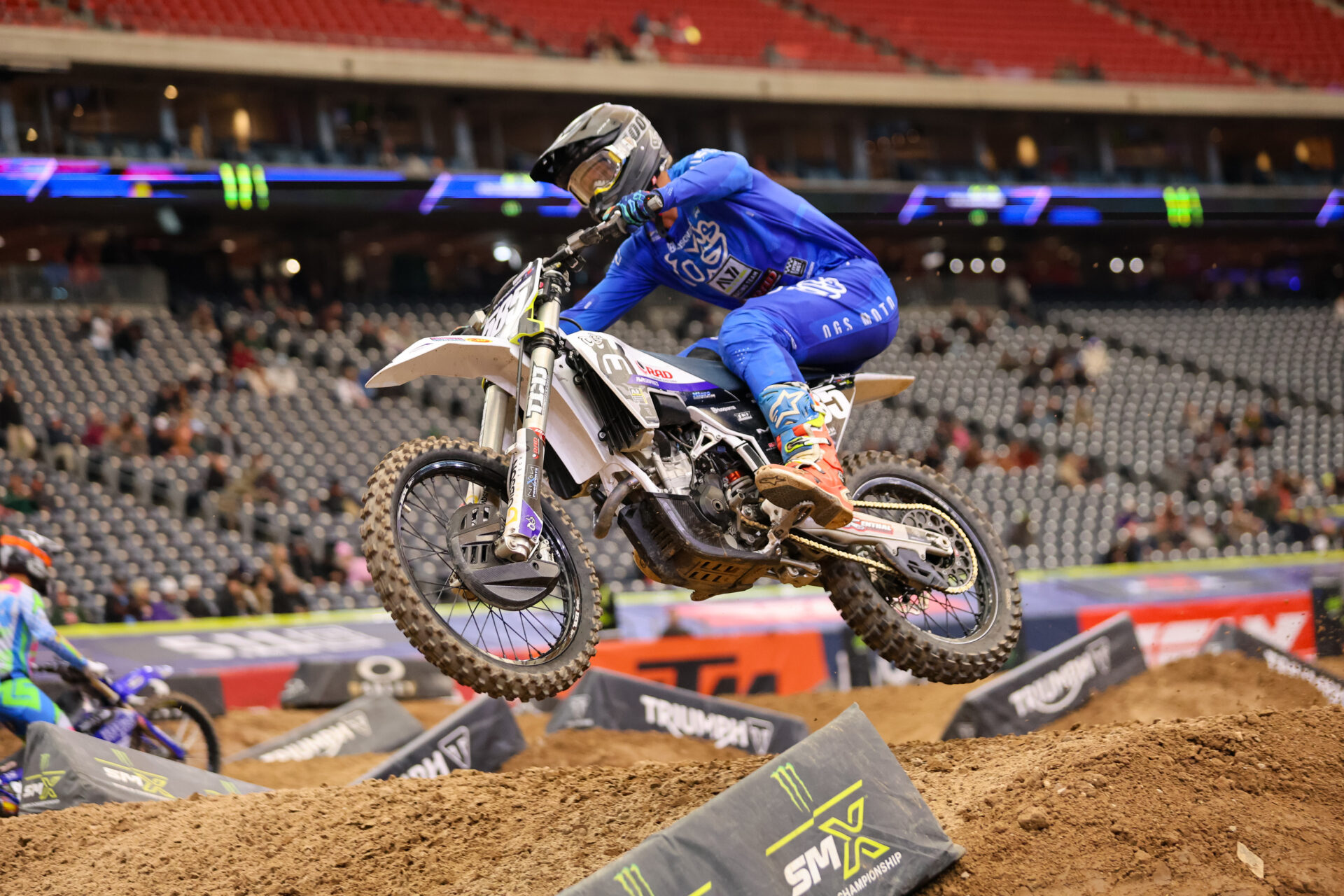
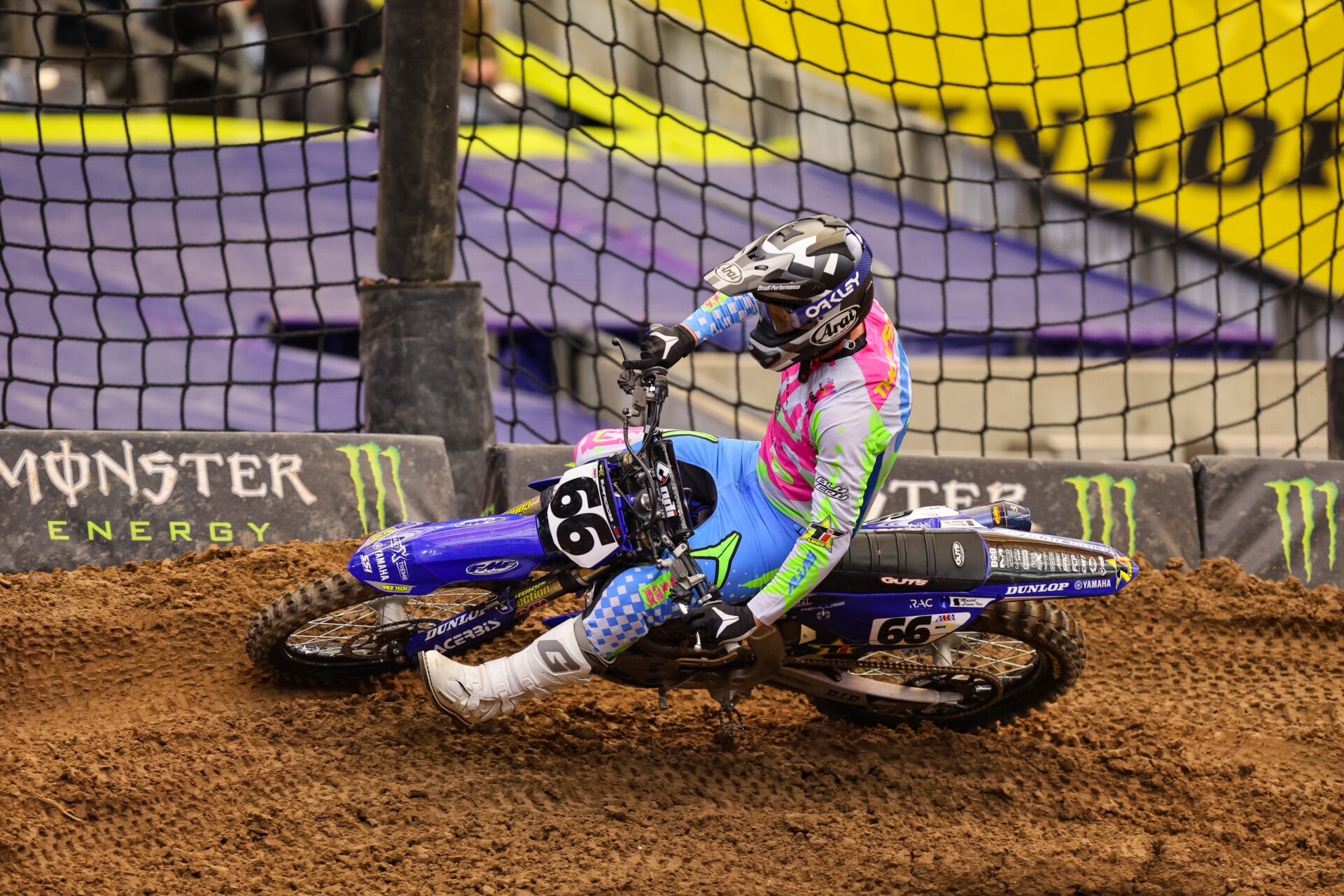
This past weekend, the 2026 Monster Energy Supercross Series made its way to the Lone Star State and Round 4 in Houston. This was also the first Triple Crown formatted event of 2026, so the riders would be racing three shorter main events, instead of one long final race. Honestly, I haven’t figured out if I’m a fan of the Triple Crown format. The races are short and good finishes are usually start-dependant, however, they are certainly different and as we witnessed on Saturday night, this format provides the backdrop for exciting racing. Now, I’m not going to go into detailed results from Houston, as I’m sure you’ve seen them already, all I’m going to say about Round 4 is that there were some fortunate riders on Saturday evening. Cooper Webb, who ended up grabbing the 450SX class overall win, was certainly fortunate as he didn’t even win a main event, instead going 4-2-3 for the victory. Eli Tomac, was also very fortunate as he had a big get off in the second main event, but thankfully came away unscathed. Finally, Haiden Deegan was fortunate on Saturday as the rest of the 250SX West field appeared to just let him dominate all three main events. Oh sure, a few put up a bit of a fight at times, but overall it was hard to watch. Deegs has his fellow 250SX West riders beaten down into submission, and he knows it. So, yes you sometimes need to be lucky to be good and we definitely witnessed that in Houston. Finally, our Canadian trio of riders had a solid night at Round 4. Cole Thompson rode well again, but missed qualifying for the night show by just one spot in the 450SX LCQ. Cole will be back racing AX this Friday evening in Prescott, AZ, and then lining up again in Glendale on Saturday. Blake Davies also failed to qualify for the night show in the 250SX West class, but he certainly had his best ride of 2026 in the LCQ. Blake has been slowly improving each week in the Monster Energy Supercross Series, with two races remaining before he heads home, he’s looking to qualify for at least one 250SX West main event. Our third Canadian rider Preston Masciangelo, was a little off with his speed and starts in Houston and that cost him any chance of making the highly competitive night show. The Triple Crown format is definitely stressful on the privateer riders as one little mistake can keep them from the night show and the prestige of racing in front of a stadium full of spectators. Now, it’s onto Glendale and Round 5!
In recent weeks, my son has had a plethora of Junior C hockey games, which has required several hours of driving to and from games, while the distances haven’t been too long (two hours one-way is the max that we have to drive), most of the time the drives home have been at night. For those of you who have driven with me at night, you know that I like to have a certainly type of music on and I don’t talk much. Usually, I’m just watching the road pass by, while doing a lot of thinking. The other night while driving home from Muskoka, I started to think about Canadian motocross in ten year increments, and some of the changes we’ve witnessed in the past 40 years. We’ve seen major bikes changes since 1986, we’ve seen riders come and go in our sport, we’ve seen the Pro National Series both contract and expand multiple times, and we’ve witnessed technique changes with regard to how we approach riding our dirt bikes. It’s been a wild ride during the past four decades and it should make us all curious about what changes we might see in 2026!
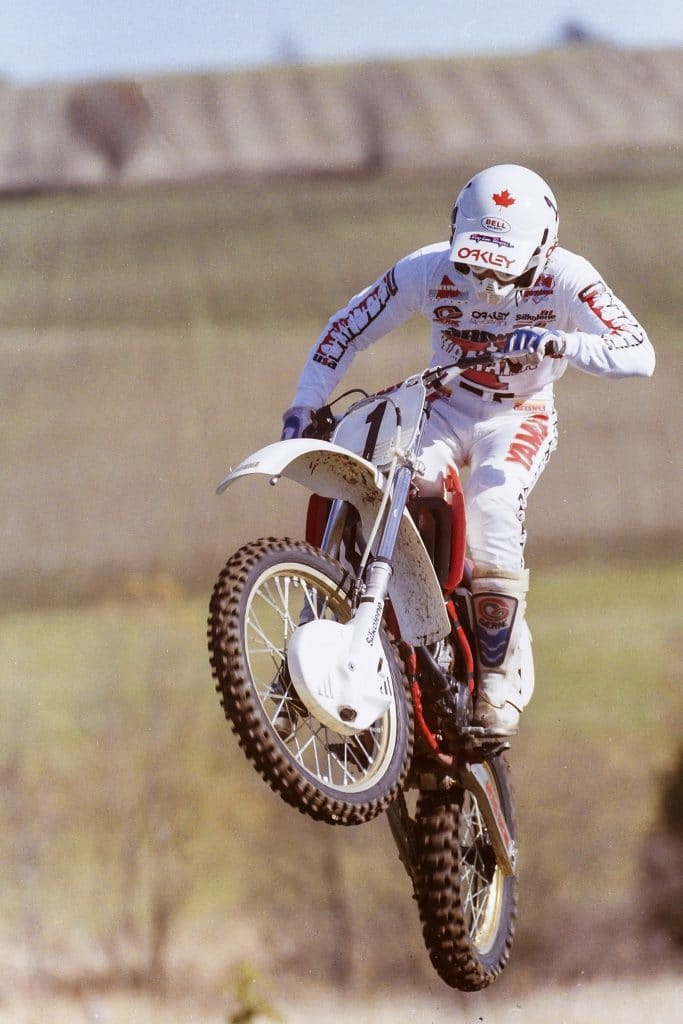
1986- The Sport Is Rolling
During the mid-1980s, the sport of motocross in Canada (as well as the Canadian economy) was doing very well. Dirt bike sales were solid, the OEMs were happy, there was a lot of tracks to ride, and generally speaking, the sport was still fairly inexpensive to participate in. Also, the top riders in Canadian motocross (Ross Pederson and Doug Hoover) were making good money as they travelled across the Country competing in the CMA Nationals. But, while the money was good, the top riders were also racing a lot and earning every penny. Both Ross and Doug were racing over 25 times a year in those days, and I believe Ross was racing even more from January to October. After losing the 125 class to Hoover in 1985, Ross would come back in 1986 and dominate all three classes in the CMA Nationals. It was also a great time to be an Amateur rider in 1986, as there were plenty of tracks and at least in Ontario, there were a lot of entries at most of the local events. I was racing a Markham Honda CR80 in 1986, and although I saw a lot of the back of Steve Bulyovsky in the 80A class, my favourite race that year was probably the Hamilton AX at Copps Coliseum, where they ran a 80cc support class. Unfortunately, as that decade would approach its conclusion, the high flying 1980s would be coming to an end, and I don’t just mean on the calendar.

1996- Is that light at the end of the tunnel?
As I mentioned above, as the 1980s came to an end and we welcomed in the 1990s, we also found ourselves in an economic recession, and naturally, the powersport industry was hit very hard. Bike sales plummeted, OEMs panicked, and sponsorship money quickly dried up. The CMA with their limited resources and vision, had run the Canadian Nationals into the ground, and in 1994 a man by the name of Mark Stallybrass had step up and took over the National Series. Little by little, Mark was once again growing the Pro National Series, while on the Amateur side of things, there was a new event in the small Ontario hamlet of Walton, called the Walton TransCan. In a nutshell, the sport in Canada was putting the worst behind it, and by 1996 there was now a light at the end of the tunnel. The CMRC Pro National Series was still based in the Eastern half of Canada, and wouldn’t go West until the following year with new rounds in Nanaimo and Antler Lake. However, in August of 1996, the final round of the series from Walton was recorded and televised nationally on TSN. The television era for outdoor motocross in Canada had finally began, and it couldn’t come at a better time. It’s hard to believe that 1996 is now thirty years ago, but when I look back that year was my best overall as a pro racer. It began in January that year with two trips to Germany to compete in the ADAC German SX Series, there was also a long drive to Minneapolis to race the SX there, then it was down to Florida where I had my best showing at both the Gainesville National and the Daytona SX. Back home, I was able to repeat as the Ontario Champion, and I also won the St. Hubert, QC National, and sat atop the overall National points standings for a few weeks. Unfortunately, I wasn’t able to close out either the 125 or 250 class championships, instead allowing Marco Dube and Marty Burr to take the honours. Overall, it was a solid year, and after some very lean years in our sport in the early 1990s, things were treading upwards in Canadian motocross.
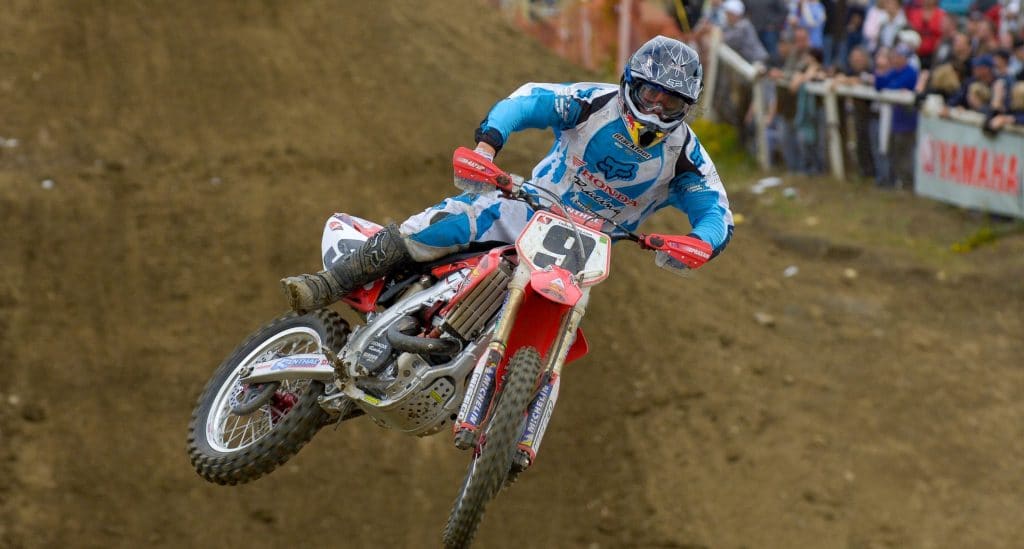
2006- The Year of Dusty Klatt
Our sport in Canada changed a lot from 1996 to 2006, both on the Amateur and Pro side of things. The Walton TransCan was getting bigger each year as riders from all over North America were attending. The overall economy was solid, and that meant that the OEMs felt comfortable spending money on motocross. The CMRC Pro Nationals were at their peak, with ten rounds right across the country. If you were a top ten rider in the MX1 class, then you were probably making good money racing the Pro series, and if you were one of the top riders, like five-time champion JSR, then you were making really good money. From 2001 to 2005, JSR had gone on a championship run, the likes we hadn’t witnessed since the days of Ross Pederson. One of the things that also made those JSR years even more unique was that he had all of that success on his trusty Blackfoot Honda CR250R two-stroke. JSR was incredible to watch on his two-stroke, as he was fast, fit, and he knew how to ride a two-stroke very well. But, when he was handed his #1 plate at the end of 2005, few of us knew that we were witnessing the final championship in the premier class on a two-stroke. The following year, JSR made the switch to the new Honda CRF450R (a move that he later said he regretted), and he also welcomed in a new teammate in the MX1 class, a kid from the Island of BC named Dusty Klatt. In 2006, Dusty came out swinging on his Blackfoot Honda CRF450R and few could match his raw speed and BMX inspired technique. Dusty would transform how we looked at riding a dirt bike in Canada, the same way James Stewart was in the USA. He was incredible to watch throughout the summer of 2006, and even though JSR would get close to Klatt in the final few rounds, he was still no match for the quiet kid from Campbell River, BC. Dusty would also dominate the Montreal SX in 2006, in what I consider to be one of the best rides by a Canadian rider I have ever witnessed. The following year, Dusty would sign with the then small Star Racing Yamaha Team as one of their 250SX West riders. Unfortunately, he got hurt early in the SX series, and then returned to Canada the following season. Dusty would win another MX1 title in 2010, but nothing in my opinion would compare to how good he was in 2006. As I said, he changed how we looked at riding a dirt bike that year!

2016- The Orange Brigade
As we transitioned through the 2000s, the CMRC Pro Nationals were still doing very well in 2016. In 2013, the Leading Edge Kawasaki Team had brought in Australia rider Brett Metcalfe to win the MX1 Championship. Metty was a World Class rider with a solid resume of race wins in the USA. Up until that point, he was truly the best all-around rider to ever line up at a Canadian National. Metcalfe would return in 2015, but some mechanical issues would keep him from winning another title. So, while Kawasaki, Honda, and Yamaha were trading MX1 Championships in the years leading up to 2016, KTM decided to jump in with both feet when they announced the signing top USA rider Davi Millsaps. It was a massive step towards KTM ambitions to win a Canadian MX1 Championship and one that sent shock waves around the Globe. At the time, Millsaps was doing a lot of testing for the KTM Factory Team, so he was well-like around the team in California. When first approached with the idea, Millsaps was luke warm to the idea of spending his summer in Canada, but when the money became right, as well as the fact that he would be able to race a full works bike, he eventually agreed. The KTM Canada Team also had Cole Thompson as their MX2 class rider, as well as Kaven Benoit to race along side Millsaps in the MX1 class. It was a powerhouse team that year, and the riders didn’t disappoint. Millsaps was incredible that summer, his speed and aggression was unmatched in the MX1 class. Also, it was interesting to see his demeanour change as the summer rolled on. At first, he was a little stand offish when speaking to the media. However, by the mid-way point of the series, he loosened up, and was great to chat with after the races. Cole Thompson would also take home the MX2 title in 2016, making it a clean sweep for the KTM Canada Team. Finally, the third rider on the team, Kaven Benoit, had his coming out party at both the Deschambault National, as well as the MXON in Italy. It was an amazing season for KTM, and one that really solidified them as one of the top brands in Canada.
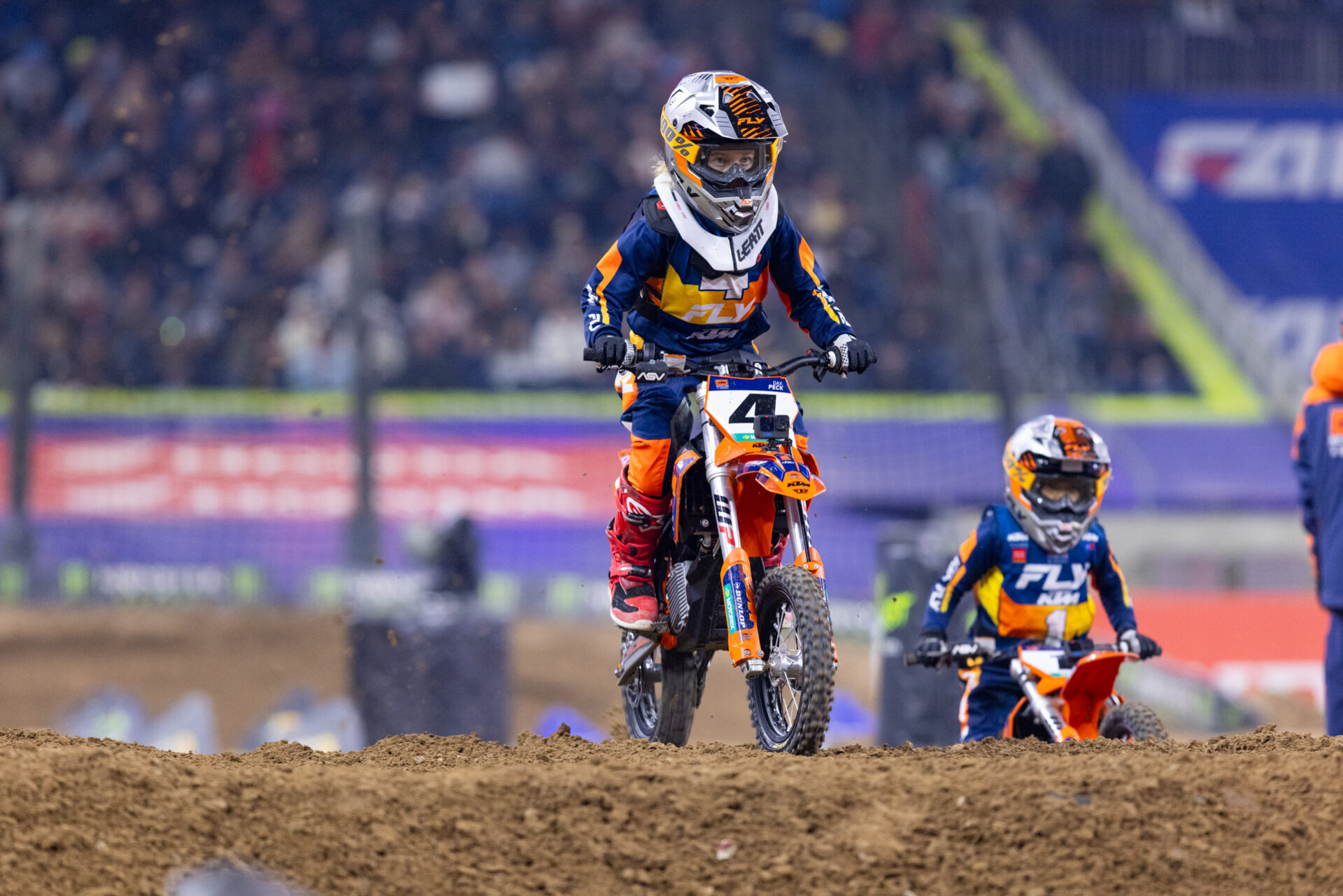
So, as you can see it’s been an interesting 40 years in Canada motocross, and I’m just scratching the surface on some of the memorable story lines. I wonder what we’re going to see this year in Canadian MX? Can Preston Kilroy repeat as our 250 class Champion? How good is the Pettis/Wright battle going to be this summer? Will Harry Kullas be able to bring back a 450 championship to the KTM Canada Team? Will we see the continued growth and excitement surrounding the WMX class in Canada? and how will the next class of young pro riders do this summer as they navigate their way through their first Triple Crown Series. These are all questions that will get answered this summer, but first up in 2026 is perhaps the most famous track in Canada, Gopher Dunes, celebrating their 40th Anniversary with a party on February 28th. If history is any type of guide then we know that this year, just like 1986, 1996, 2006, and 2016, is going to be a memorable one. Thank you for reading, and if you have any comments or questions, please email me at editor@mxpmag.com. Finally, my pick for the Motovan Canada Rider of the Week is young Dax Peck, who rode well to finish 12th in the KTM JR SX race in Houston. Congratulations Dax on a great ride in Houston!


